Article by Finley Ever
Qualifying is arguably just as important in the F1 world as the race itself. Take the Monaco Grand Prix for example. Since it’s extremely hard to overtake on this street circuit, qualifying is crucial to how the drivers finish the race. If you aren’t sure how F1 Saturdays work, this is the article for you!
Qualifying happens on the Saturday before a race, typically after Practice Three if there isn’t a Sprint race that weekend. It is a three-section event which determines where the 22 drivers will start in the race the next day.
It’s fairly simple: The fastest starts in the front and the slowest starts in the back!
As previously stated, this F1 event is separated into three parts: Q1, Q2, and Q3. Let’s talk about Q1 first.
q1
The first part of qualifying is an 18-minute time slot for all 22 drivers to race as fast and accurate as they can in an attempt to make it to the top of the grid, with first positions being called ‘Pole Position’. Not all the drivers have the cars to compete at the top of the field, so a reasonable goal for most drivers is to try and not find themselves in the bottom 6.
By the end of Q1, the six drivers with the slowest lap times will be eliminated, meaning that they don’t get to drive in the next section of Qualifying and will start from the back of the grid in the race.
Q2
Q2 follows a similar pattern with the bottom six drivers being eliminated, it’s just 15 minutes instead of 18.
Q3
Finally, Q3. Which is referred to as the top ten shootout. The ten drivers who manage to make it through to the final sector of Qualifying drive for a top ten position. The drivers usually in the top ten are all known race winners and world champions, so they’re usually driving with the intention of making it onto the front row, which is first (Pole) and second.
No drivers are eliminated in Q3 because they are the final ten. Wherever those drivers finish is also where they’ll be starting for the race.
Colored sectors
When watching a qualifying session, a way to watch and sort of predict who’s going to come out on top can be found at the bottom of your screen under the driver’s lap time. A line with three different colors is there. These different colors mean different things!
Yellow: The driver completed the sector he just drove through slower than his fastest time, meaning that he isn’t improving.
Green: A personal fastest sector time for the driver.
Purple: What every driver wants to see! The drivers who achieve a purple sector are the fastest out of every driver in that sector! The drivers who get purple sectors will most likely skyrocket to the front or close to the front of the grid once they complete their lap!
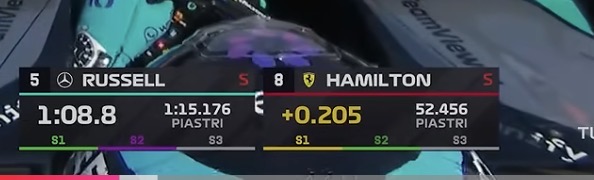
Remember, every single race is divided into three sectors, so a driver could get a yellow sector and then improve into a purple sector later on the track! Color coding is a universal experience!
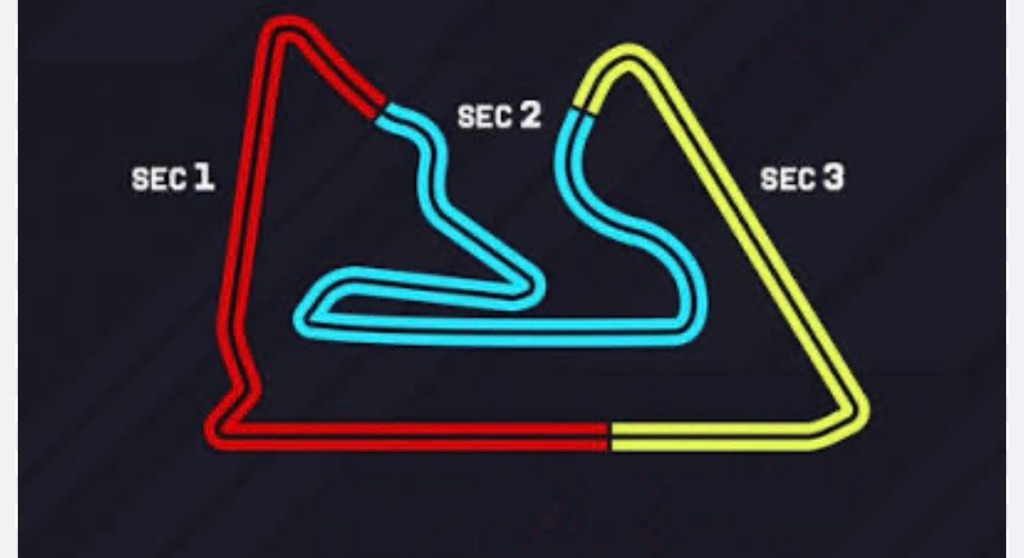
Hopefully this was easy to understand! If you have any questions, feel free to leave them in the comments!
xo
 The Formula 1 edit
Leave a comment